Stepping Into A Whole New World – Welcome Guest Author Aurelia Evans!

Jen Wright's avatarJennifer Wright

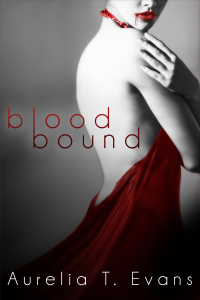
The lovely Aurelia Evans is my guest today, talking about her new adventures in self-publishing and her Bloodbound series! Please join me in welcoming her and feel free to leave a comment or two. 🙂

Aurelia Evans 2 - Blood Bound cover 2-5-15

Stepping Into A Whole New World

In a little over a week, I’ll be self-publishing for the first time. The first book in my vampire serial novel, Bloodbound, is coming out on Valentine’s Day. That’s not on purpose. It was just the middle Saturday in February, which was when I wanted to set my deadline. But hey, Bloody Valentine is a thing. A gothic thing. I like gothic things.

I’m excited about it, because it’s an incarnation of a story that I’ve been trying to write since I was too young to write erotica. I tried. Oh, how I tried. Granted, I was pretty good for my age. Now, though, I just snort into…

View original post 1,527 more words

Book Review: The Dreamt Child

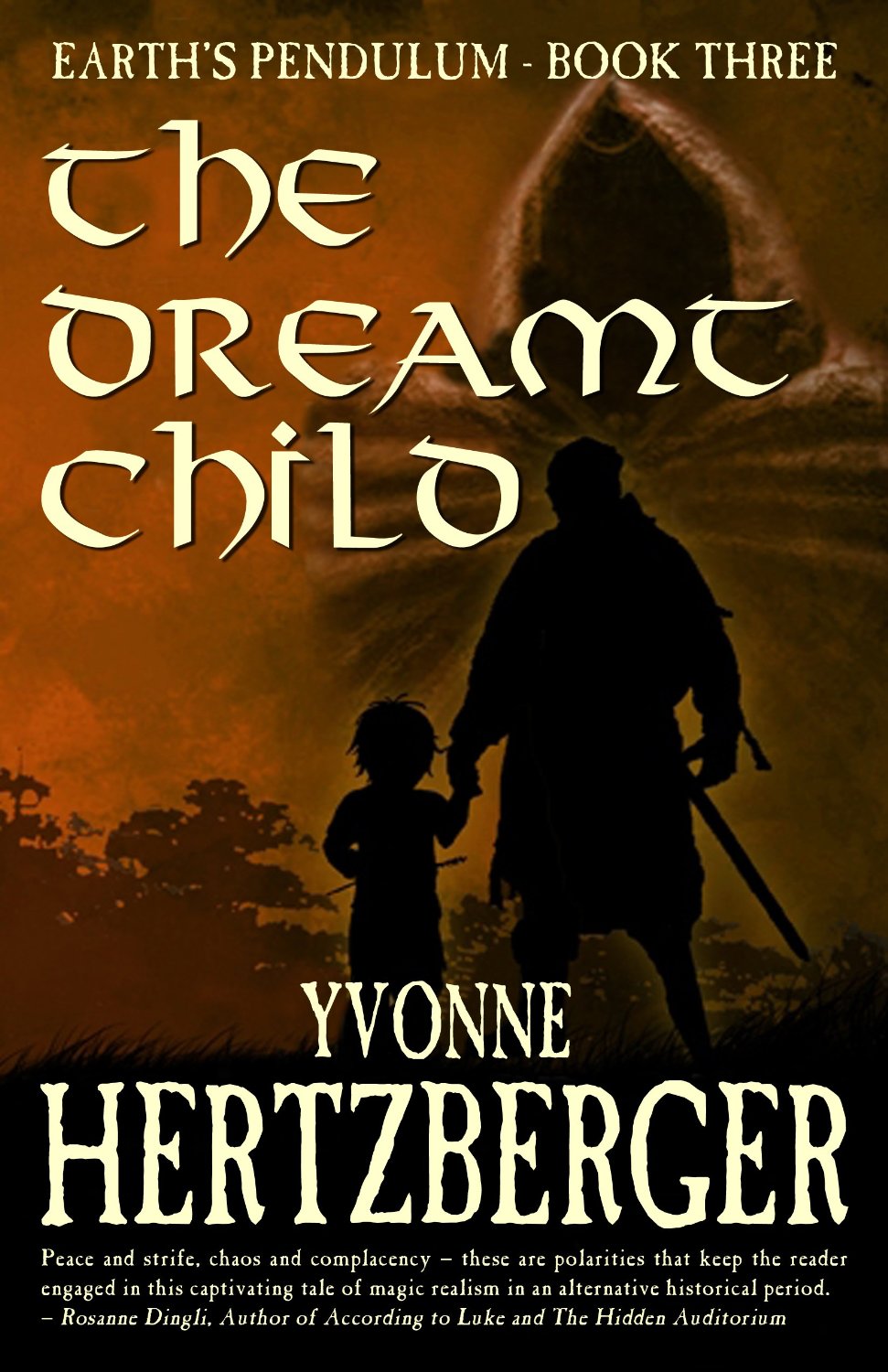
dreamtIn the third and last book of Earth’s Pendulum Series, The Dreamt Child by Yvonne Hertzberger, we begin where the last book ended, in a self-imposed exile by our protagonist, a seer named Liannis. After the events of the previous two years, Mother Earth bade her seer to a hidden cabin in order to recoup her strength, isolated from the world without. Unlooked for, her servant, driven by the same compulsion that drove Liannis into exile, arrives to bring her back into the world, and a mother very much in distress.

Upon her return, Liannis discovers that the two years of famine shows signs of ending, but that poses a challenge to the ruler of the demesne of Bargia, Lord Gaelen. In addition to Bargia, he has ruled over Catania after it’s defeat several decades previously, and Leith, a demesne he took over after defeating a group of traitors that killed it’s leader, Lord Merlost. For Gaelen, the situation is fast becoming untenable due to limited resources stretched too thin.

Liannis is tasked once again to assist Gaelen to bring balance to the One Isle. Only though balance can Earth sustain life and provide for her peoples. Further complicating her task is her relationship with her servant Merrist. Seers, by tradition, take no mate as their duties require them to be free to answer Earth’s call at need. The question then becomes will Liannis accept Merrist as a partner? How will the people react? Will Earth’s balance be restored?

And what of the Dreamt Child?

With The Dreamt Child, Yvonne completed the story which began with Liannis’s parents back in book one. It’s a story of the necessity of finding harmony with nature. In many respects, The Earth’s Pendulum Series is an environmental story, that life is dependent of Earth, that the planet sustains and nurtures life. It’s a complex system, and one that we are discovering to be fragile. Our survival depends on Earth to feed us, and so it is incumbent on us to be good stewards and not take life for granted.

Broader still in the series is the price we pay for war and how costly winning a lasting peace can me. The stories are rife with heroism and sacrifices, that our life choices and be taken from us, and that in doing so we have the opportunity to find a destiny wholly unlooked-for. Yes, there is love and intrigue, jealousy and betrayal, hallmarks all of a good story. Through it all, the over reaching theme is one of personal sacrifice for the greater good. Liannis exemplifies this time and again.

As with her previous books, I rate it highly, five stars. I read the book once several month ago, and I reread it last night to prepare for this review. I found the second time very much life reminiscing with an old friend. I loved the characters and their story arcs, and it’s nice to know that it’s a book that you can read again and still enjoy.


Yvonne Hertzberger
Book One – Back from Chaos
Book Two – Through Kestrel’s Eyes

List of Book Reviews
Next review –  The Protected
Previous Review – Quarter Past Midnight

Lazy Day

It’s a bit of a lazy snow day. I haven’t done much except had breakfast, finished reading The Hitchhiker’s Guide to the Galaxy, and written a few simple book reviews on Amazon and Goodreads. I wrote my most scathing review to date. Want to see it? Okay, since you asked.

This is what I had to say about Home Depot: Profiles in Courage…

“Poorly written collection of stories that came across as a bitter ad hominem attack on people the author didn’t like. The book is neither clever nor humorous and was a complete waste of money. Do yourself a favor and steer clear.”

That’s the entirety of the review. It wasn’t eloquent of well written, but it is the truth. And I’m worried that my writing is bad!

What it did do is make me more determined to write a good story, write it well, and make it something people will want to read and share. That’s my goal. I know I repeat it a lot, but I have to pump myself up. In my head I hear Rob Schneider’s character from The Water Boy, “You can do it!”

On my Twitter feed this morning

A nice way to start my day!

How many words should you write?

Another of my goals for this year is to start blogging again on a consistent basis. I let myself slide last year, and the stats reflect that. I know it should be more than simply a numbers game, but building an audience is part marketing, but mostly it’s just creating content to be read, shared, and I hope enjoyed.

So for the second day of the year, I wanted to look at something we writers focus on, word count. Why is it so important? Again, it’s a numbers game, one that’s tied partly to ego. We all want to write expressively, artistically, and hopefully coherently. For those of us who are naturally quiet, it’s a way to say what we need to say as eloquently as we wish. Through my writing, I can say anything I want to say in real life.

What brought this on was a question someone posted on a NaNoWriMo page on Facebook. A member asked, how many words do you put in a scene? I didn’t answer since I honestly don’t know. Is there a set number of words one should strive for? Does it matter?

Maybe it depends on the genre you’re writing for, but in my humble opinion, who cares? In writing, quality should always trump quantity. Why say in a thousand words what can be said in a hundred? It’s easy to get sucked into the trap of trying to paint an elaborate fresco that we lose focus of the point. Say what needs to be said in as little words as possible.

In my own works, I’ve noticed a wide range of word counts, from a few hundred, up to several thousand words. In each, I worked to add, or to subtract, words in order to accomplish the particular goal of each scene. That’s what makes writing so difficult sometimes. There is no word count rule. It’s all dependent on what you the writer want to say.

I know it’s a crappy answer, if you had hoped for one. I believe I have already stated that I don’t really have an answer. I write as long as it needs to be. The number of words should never be the main objective in anything, whether in the length of a scene, a chapter, or even the finished project.

What’s more important is to engage the reader, to give them enough to create the scene in their head. Too many words have often over-whelmed me, and even bored me to the point I stop reading. Too few, and there isn’t enough information for the reader to form the scene, and why bother continuing?

On that note, I’ll take my own advice and stop here. Write to your heart’s content, but keep in mind that the story itself is what’s important. Don’t belabor your work with unnecessary words, and more importantly, just have fun.